The Mother Wound: What It Is and How I Began to Heal Mine

Your mother was your first universe. Her arms, your first home.
The mother wound is what happens when that home wasn't steady, when love arrived with conditions, or silence, or a grief she was carrying that had nowhere else to go. It isn't about blaming her. It's about naming something many of us have felt and never had words for: an ache we can't quite locate, a hesitation around being fully seen, a hunger for a kind of love that never quite lands.
It lives quietly. In the space between words. In the parts of us that learned, early, to make ourselves smaller, quieter, easier to love.
Meeting My Own Mother Wound
There was a time when I didn't know what the mother wound was. All I knew was the ache: a quiet but constant disconnection from my mother, a deep unease that never seemed to settle.
Our relationship held tension, often unspoken but always present. Beneath the surface, something else stirred too, a heaviness inside me I couldn't explain. I felt like I was drifting in deep waters, barely keeping my head above the surface. Caught in patterns I couldn't break. Carrying pain I couldn't name.

It wasn't until I began to turn inward, to listen closely and trace the threads of my emotional life, that I began to see what had long gone unseen. I had absorbed so much of my mother's inner world: her grief, her fears, her coping mechanisms, her quiet longing. Somewhere along the way, they became entangled with my own.
The more I listened, the more I recognised how this wound had shaped me, not loudly, but through the subtle ways I abandoned myself. The perfectionism. The self-silencing. The quiet resentment. The aching need for love that never quite landed.
When I finally named it, something shifted. Not all at once, but enough to begin.
Healing didn't rewrite the past. It changed how I met it. It softened something hard, and made space for truth, and for tenderness. Over time, my relationship with my mother began to shift too, not through blame, but through clarity, and through boundaries that honoured us both.
Most of all, it brought me home to myself.
How the Mother Wound Shows Up
It rarely announces itself. It doesn't arrive labelled. Instead, it disguises itself as personality: the perfectionist, the peacekeeper, the one who's always fine.

For many women, it shows up as a quiet doubt about their own worth, or a fear that closeness will end in being left. It can look like a scarcity around love and money both, a sense that there's never quite enough. It can sound like a harsh inner voice that's never satisfied. It can feel like grief, or anger, that arrives with no clear reason attached.
It often shows up in relationships: a struggle to set boundaries, a pull toward people who echo old, familiar patterns, a habit of shrinking to keep the peace. And sometimes it shows up as a block, in creativity, in ambition, in the ability to simply want something and go after it, for no reason you can name.
None of this means something is wrong with you. It means something happened to you, long before you had the words for it, and your body has been finding ways to carry it ever since.
A Note on This Work
This article is about recognising a pattern, not diagnosing a condition, and it isn't a substitute for professional support.
If your experience with your mother involved abuse, neglect, or ongoing harm, please know that what you're carrying deserves more than a blog post, and a therapist trained in trauma can offer support that this space can't. The same is true if what comes up while reading this feels too heavy to hold alone. Reaching out for that kind of help is not a failure of this work. It's often exactly what it asks of you.
A Gentle Place to Begin
If you'd like somewhere soft to start, before the journaling, before the deeper work, my free Isis meditation is a 20-minute guided journey into the Temple of Isis. In her myth, Isis is a mother herself, and the one who gathers what was scattered and makes it whole again. Sometimes that's exactly what this healing asks of us too.
This Wound Is Also Ancestral
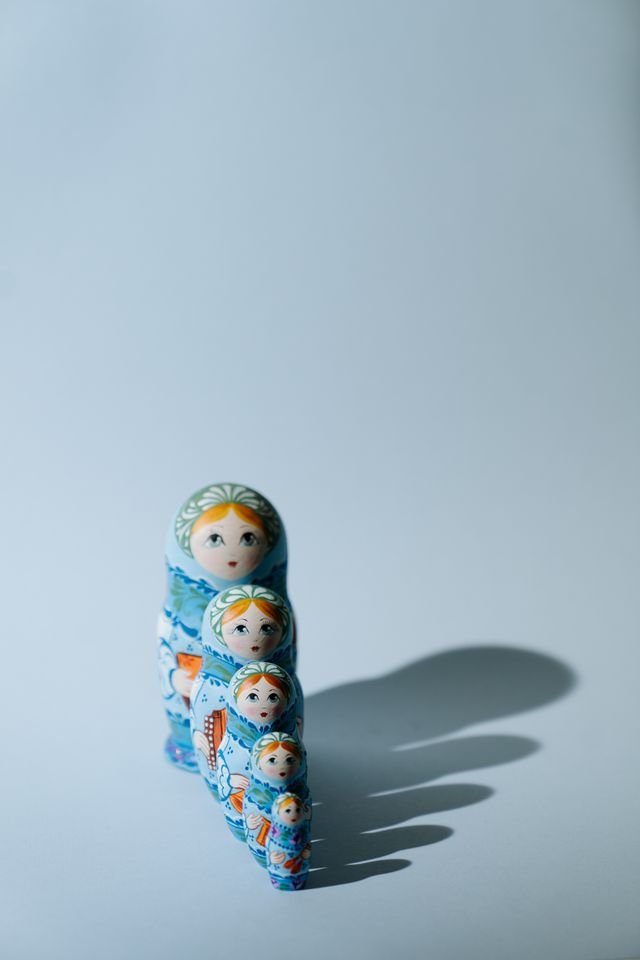
The mother wound is rarely only personal. It runs through generations, from mother to daughter, shaped by long histories in which women's pain had nowhere to go, so it was carried instead.
Your mother had a mother too, and unhealed pain has a way of quietly repeating itself, not because anyone chose it, but because no one showed her another way. When we begin to heal, in some way, we begin to interrupt that quiet repetition, for ourselves and for whoever comes after us.
Beginning to Heal
Healing the mother wound isn't a straight line, and it isn't about becoming someone new. It's a return to who you already are, one layer at a time.
1. Journaling as a Way In
Journaling is one of the most direct ways to meet this wound. It gives shape to feelings that have long stayed formless.

A few prompts to sit with:
Is it difficult to feel centred and in your power around your mother?
Can you express your true feelings to her in a loving way?
In what ways might you find yourself projecting this wound onto others?
How did you relate to your mother as a child? If words are hard, try drawing or colour instead.
Did you ever betray your own instinct to avoid disappointing someone?
2. Reconnect with Yourself and Feel What's There
Begin by simply being with yourself. Sit with your heart. Let the feelings rise, whatever they are. Healing starts when we make space for what once felt too much to feel.
3. Set Boundaries for Emotional Safety
Boundaries aren't walls. They're a way of telling the truth about what you need. You're allowed to protect your energy, and you get to decide what closeness feels safe for you, with your mother and with anyone else. That decision is yours to make, at whatever pace feels right.
4. Release Expectations of Others
Your mother, like all parents, carried her own unhealed wounds, shaped by her own time, her own lineage, her own pain. She may have passed on what she knew without ever meaning to.
Healing doesn't require her to change. It asks you to grieve what you didn't receive: the unmet needs, the silence, the longing, and to step out of waiting for someone else to make it right.
Forgiveness, when it comes, is an act of liberation, not permission. And grief can become the gateway through.
If you'd like to go deeper into what that grief can hold, and how to move through it rather than around it, Grief Healing for Women is a good place to continue.

5. Nurture Your Inner Child
Somewhere inside you is the part that first learned to go quiet, to be easy, to ask for less. Begin tending to her with curiosity and warmth. Be the voice she needed. Let her know, now, that she's safe.
6. Sit With Your Feelings Without Judgment
Let whatever comes, sadness, anger, grief, longing, move through without pushing it away. These aren't flaws. They're simply what healing sounds like, on its way through.
A Lifelong, Gentle Return
This isn't work you finish. It's work you return to, one layer, one breath, one honest moment at a time. And each time you do, something in you softens a little more, and something in the pattern, the one that started long before you, begins to loosen too.
You are not alone in this. And you are not required to carry it perfectly.
If You're Ready to Go Deeper
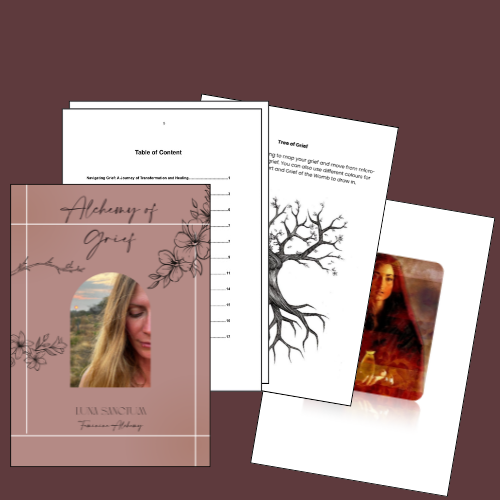
I made Alchemy of Grief because grief, like this wound, rarely moves in a straight line.
It's a self-paced course for meeting grief as it actually comes: the grief of what you didn't receive, the grief carried in the body, the grief that doesn't announce itself but asks to be felt anyway.
With Love,