Grief Healing for Women: Moving Through Loss, Not Around It
There is a time for light and a time for darkness.
A time for joy, and a time to grieve.
Maybe you lost someone. Maybe a relationship ended, or a pregnancy, or a version of your life you were sure you'd have. Maybe you can't name what it is, only that something in you feels heavy.
Whatever brought you here, you don't need to fix it, hurry it or make it make sense.
This page is a gentle place to start.
What is grief, really?
Grief is the natural response to loss, and loss comes in many forms: death, heartbreak, betrayal, miscarriage, infertility, estrangement, a move, a diagnosis, even a joyful change like becoming a mother.
Many of us were never shown how to grieve. We learned to be strong, push through and get back to normal. But grief doesn't work like that. It moves in cycles, more like tides than a straight line, and it asks to be felt before it can shift.

Why do I cry over small things?
Sometimes grief arrives as micro-griefs: a song in the supermarket, a small disappointment, a sudden flood of tears that seems out of proportion.
It usually isn't out of proportion. It's often a doorway into a bigger grief underneath, one that wasn't safe to feel at the time. If you catch yourself thinking "this is silly," try to stay curious instead of shutting it down. Grief that stays stuck can't do its work.
What are heart grief and womb grief?
In my work I describe two places grief tends to live.
Heart grief is the grief of sudden loss, shock, betrayal and isolation. You might feel it as a tight throat, shallow breathing or panic.
Womb grief is quieter and often unspoken. It can be connected to pregnancy or childbirth, loss, sexual experiences, or feeling cut off from your body and sensuality. Many women feel it in the belly and pelvis, as heaviness, tension or numbness. In womb work, it's also said to include grief passed down through the women of your family line.
Persistent pain, exhaustion or hormonal changes deserve medical attention too. Not everything in the body is grief, so please don't skip the doctor if necessary.
If the mother line is where your grief lives, you may also like The Mother Wound: What It Is and How I Began to Heal Mine.
Are you stuck in the story or in the body?
Two patterns come up again and again:
All story, no feeling. You can explain everything about what happened, but you feel nothing. Here the work is to bring the story into the body, through movement, dance, yoga or breath.
All feeling, no story. You cry on the yoga mat or in the shower and have no idea why. Here the work is to let the story emerge.
Grief needs both. When story and body meet, something shifts. This is how pain starts turning into wisdom.
Try this: a simple Tree of Grief
You'll need paper, pens and about 15 minutes.
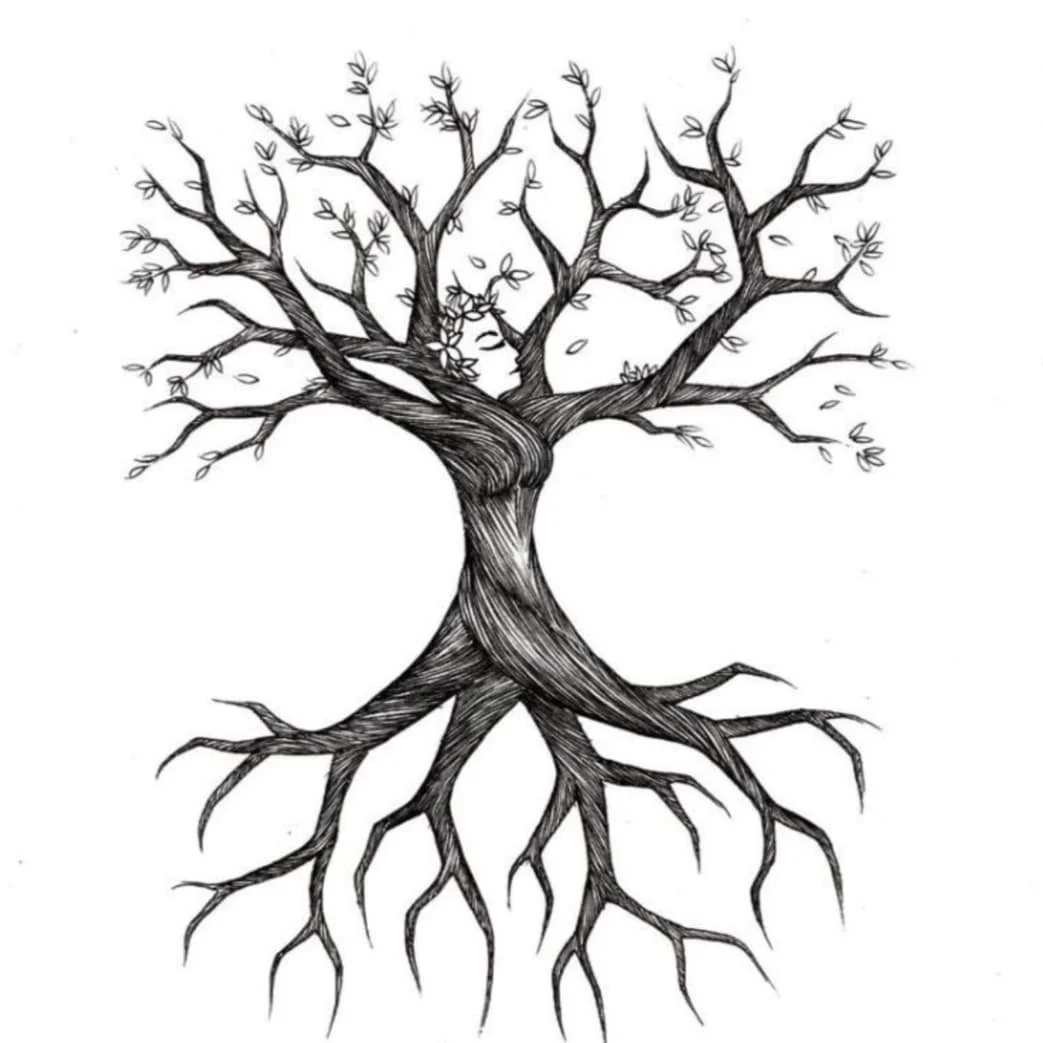
Draw a tree with branches, a trunk and roots, or use a printed outline.
In the branches, write your micro-griefs, the small things that sting today.
Follow them down the trunk. What are they connected to?
In the roots, write the deeper grief underneath, if you can feel it. You don't have to name everything.
If it helps, use one colour for heart grief and another for womb grief.
Stop whenever you need to. Put your hand on your belly or chest, breathe and drink some water.
Grief has always had a place in women's traditions
In the Irish tradition, it was the keening women who held the space around death. They sang and wailed the grief out loud, so no one had to carry it alone. Many were also midwives, present at both ends of life.
Most of us weren't handed these traditions. But we can learn to become a safe place for our own grief, and to mother our own tears the way a wise elder would.

“Grief is praise, because it is the natural way love honours what it misses.”
— Martín Prechtel
Why grief became my work
As a child, I noticed something I couldn't explain: people became strangely beautiful when they were sad. Softer. More real. More themselves.
I didn't have words for it then. I do now. When we grieve, the ego steps aside and makes space, and our true nature, our soul, comes through.
I spent my early childhood in a small village in Ukraine, and I was fascinated by how the passing of a person was honoured there. People gathered around the body and spent the night sitting with it, praying and witnessing. Grief wasn't hidden. It had a place, and people were held in it.
I remember attending a funeral in the church, standing next to my grandmother, surrounded by the heavy smell of the candles and the raw grief of the old women. An older woman threw herself, weeping and wailing, onto the body as it was carried in.
After the procession, I remember the cemetery. When the priest had finished speaking, my grandfather stepped aside and sat down in front of a grave. It was covered by a small house-like frame decorated with flowers, and the first panel, at the foot, had been pushed aside so you could look in, like into a little cave. I asked him who it was, and he told me it was his mother.
I had rarely seen him cry. He sat there in deep prayer, and he cried. It seemed to me that someone was really there, someone he was speaking to.
Then I stood outside the cemetery fence and looked over it: the graves, and the living moving between them. It felt like watching a world in between, holding both the living and the spirits of the dead. Grief was the bridge between them.
There was space for all of it. That is what I wish for you here: a place for your grief, and the gift it holds in its hands for you.
A free way to begin
If you'd like something gentle to start with, my free Isis meditation is a 20-minute guided journey into the Temple of Isis, to help you slow down, soften and be held by Isis, goddess of healing, magic and motherhood.
In the ancient Egyptian story, Isis is the one who grieves. She searches for what was lost and gathers what was scattered.
When you want to go deeper: Alchemy of Grief
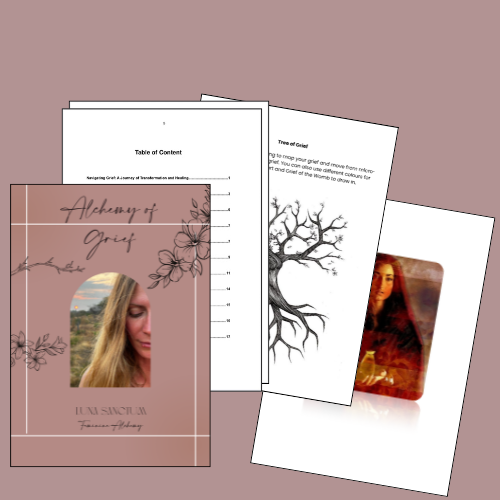
Alchemy of Grief is a short, self-guided online course for women who want to meet their grief instead of managing it.
Inside you'll find:
A guided manual on heart grief, womb grief, micro-griefs and grief as a path of initiation
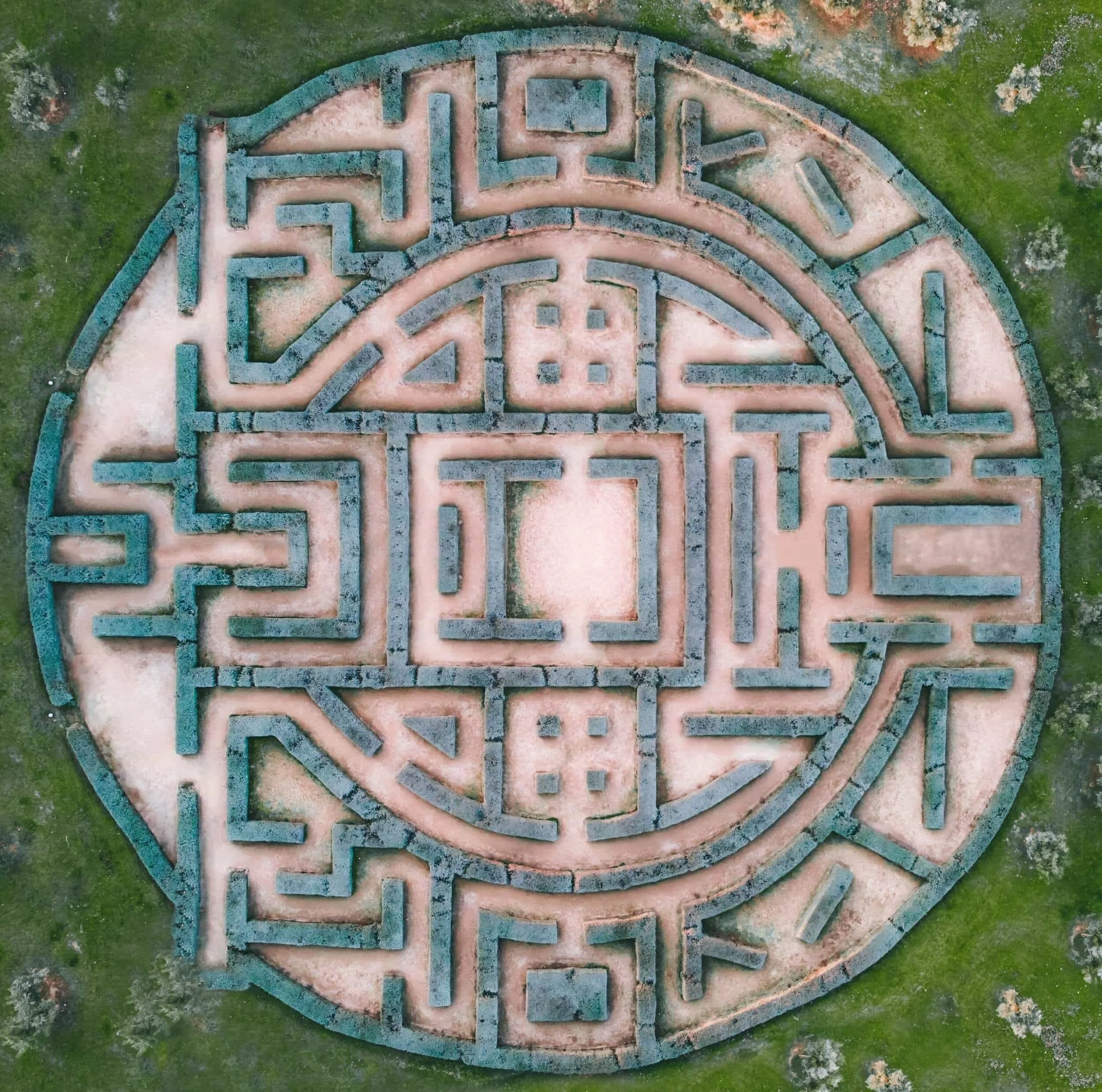
The Elemental Wheel of Grief (earth, fire, air and water) to help you see where you are in the cycle
The Tree of Grief worksheet for mapping your grief from branches to roots
Movement and sound practice for letting grief move through the body
Dream journaling and a grief altar to keep your grief company between sessions
A 20-minute audio journey into your grief
There's no fixing here, only moving closer, at your own pace.
A note on support
This page is companionship, not medical or psychological treatment. If your grief feels unmanageable, if you've lost interest in life for a long time, or if you're having thoughts of harming yourself, please reach out today to your doctor, a therapist or a crisis line in your country. You don't have to carry this alone.
You were never meant to.
With Love,