Ceremonial Cacao: 9 Benefits for Women

There's a moment, right as the bitterness hits your tongue, cacao doesn't ask to be liked right away. It asks to be met. And once you do, it has a way of never quite leaving you again.
IN THIS ARTICLE, YOU’LL DISCOVER:
⚘ Why cacao became part of my daily ritual
⚘ What "ceremonial cacao" really means
⚘ What to know before you try it
⚘ 9 ways women traditionally turn to cacao
⚘ Cacao vs. cocoa, and what the difference actually is
⚘ Washed or fermented, and why it matters
⚘ A free ceremonial cacao ritual & recipe
Why Cacao Became Part of My Daily Life
Many moons ago, I had my first cup of cacao at an ecstatic dance night. It was extremely bitter, and I remember making a face, I loved chocolate, and this was nothing like it. But maybe that's exactly why cacao never disappeared. Chocolate, sugary and far from its origins as it is, kept humanity in contact with this plant, even if we forgot what it really was underneath.
That first bitter cup was the beginning. Slowly, I found myself integrating cacao into my life, first as a small ceremony I'd hold with myself, to get centred, to meditate, to pause in the middle of a day, until it became my daily companion.
I still enjoy coffee, but these days it's more of a conscious choice, something I have once in a while, not my go-to. Cacao is. For me, it's such a gentle companion, I feel more centred, more harmonious within. I always make sure I have cacao on me. It's become a genuine reverence, this plant, this practice, this small daily return to myself.
What 'Ceremonial Cacao' Really Means
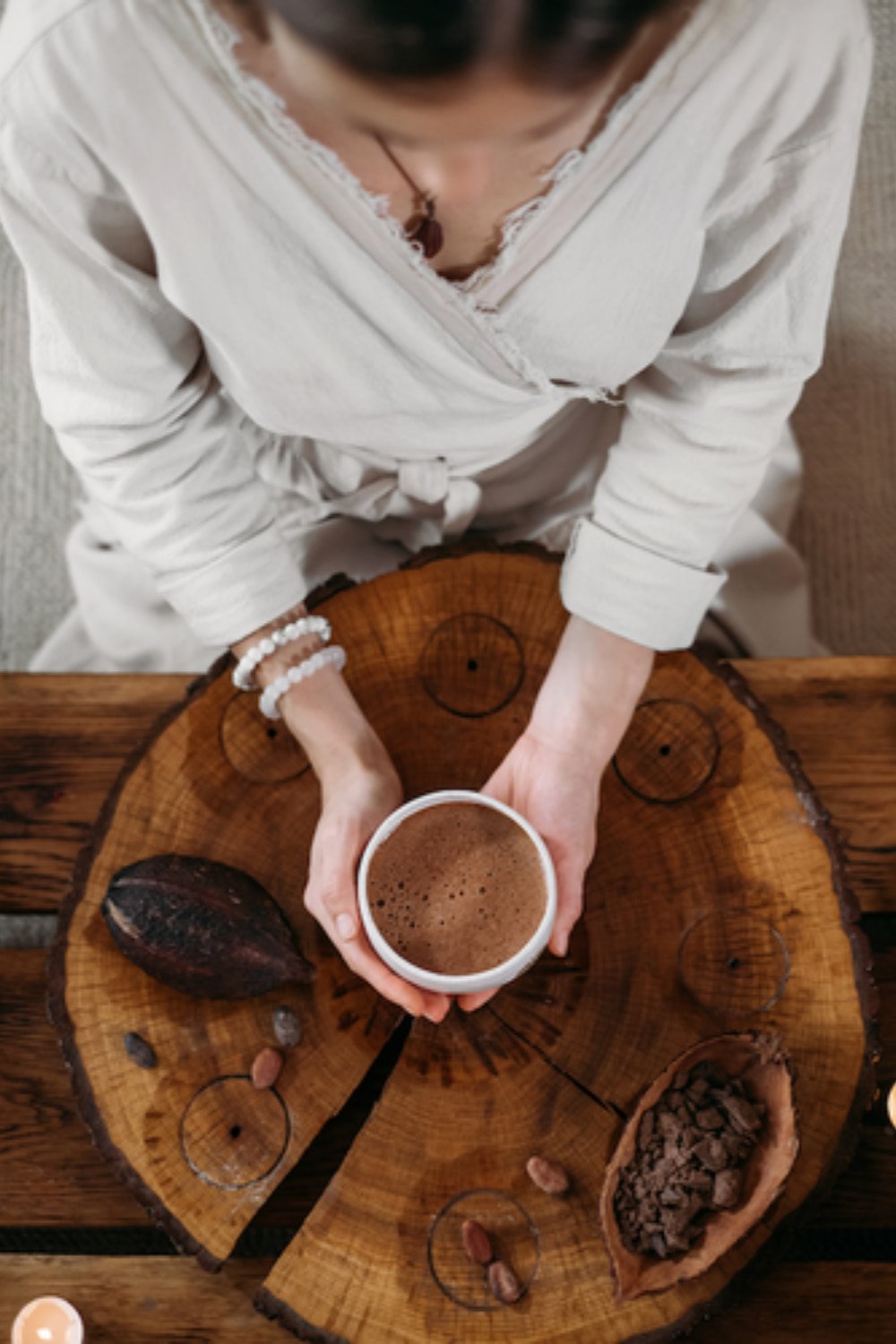
Ceremonial cacao is a minimally processed form of cacao, traditionally used in ritual, spiritual practice and intentional gathering. It's not just the drink itself, it's the intention behind how it's grown, prepared and consumed.
Its botanical name, Theobroma cacao, translates as "food of the gods," a name cacao has carried since it was first classified, and one that still feels earned.
Originating in Central and South America, cacao has been used for thousands of years in spiritual practice, long known as a plant that opens the heart. Rich in magnesium, iron and antioxidants, it also contains theobromine, a natural compound that gently stimulates circulation, which is part of why it's traditionally called heart-opening.
In Traditional Chinese Medicine, bitterness itself is associated with the heart, believed to support release and balance. Cacao's bitterness echoes that idea, and many people find that when it's prepared and drunk with intention, it becomes something more than a beverage: a small, steady invitation to arrive in yourself.
I often hold a cup while I'm doing other ritual work too, writing intentions at the New Moon, or sitting with what I'm ready to release at the Full Moon. If you'd like to explore either of those, I've written full guides: New Moon Intention Ritual and Full Moon Release Ritual.
A Note Before You Begin
Ceremonial cacao is taken in far larger amounts than a square of chocolate, and at that dose, theobromine acts as a real stimulant on the heart and circulation. Please read this before trying it, especially in ceremonial-strength doses:
Please speak with your doctor first, or avoid cacao, if you:
Take MAOI antidepressants (cacao is not recommended alongside these)
Take SSRIs or other antidepressants, or antipsychotic medication
Have a heart condition or take blood pressure medication
Are pregnant or breastfeeding (traditionally used in moderation, but check with your doctor)
Are sensitive to caffeine or other stimulants
Start with a smaller amount than you think you need, and see how your body responds before working up to a full ceremonial dose. This article is for reflection and personal ritual, not medical advice.
Nine Benefits of Cacao for Women
♡ Supports the heart, in more ways than one. Traditionally used to ease anxiety and open a sense of heart-centred awareness, alongside its gentle circulatory effect.
𖦹 A companion through the menstrual cycle. Rich in magnesium, which many women find soothing during PMS and cramping. It isn't a treatment for menstrual symptoms, but a gentle, traditional ally.
◡̈ A natural mood lift. Cacao contains small amounts of compounds like anandamide, sometimes called the "bliss molecule," alongside magnesium, both traditionally associated with ease and emotional steadiness.
∞ Steady, gentle energy. Many women, myself included, find cacao a softer companion than coffee, without the same jittery edge.
⚘ A source of iron. Ceremonial-grade cacao is a reasonable plant-based source of iron, useful to know if you're replenishing after your bleed, alongside a varied diet.
❍ A ritual for turning inward. Used intentionally, cacao has long been part of ceremonies for quieting the mind and deepening a sense of intuition and inner connection.
❀ Rich in antioxidants. Cacao is one of the most antioxidant-dense plants there is, traditionally valued for supporting the body as a whole.
☾ A gentle companion for rest. The magnesium in cacao is traditionally associated with calming the nervous system, and many women find an evening cup soothing before sleep.
𓋹 A ritual of embodiment. In ceremony or womb-centred ritual, cacao is often used as a way of coming back into the body, awakening creativity, sensuality and connection.
Cacao vs. Cocoa: What's the Difference?
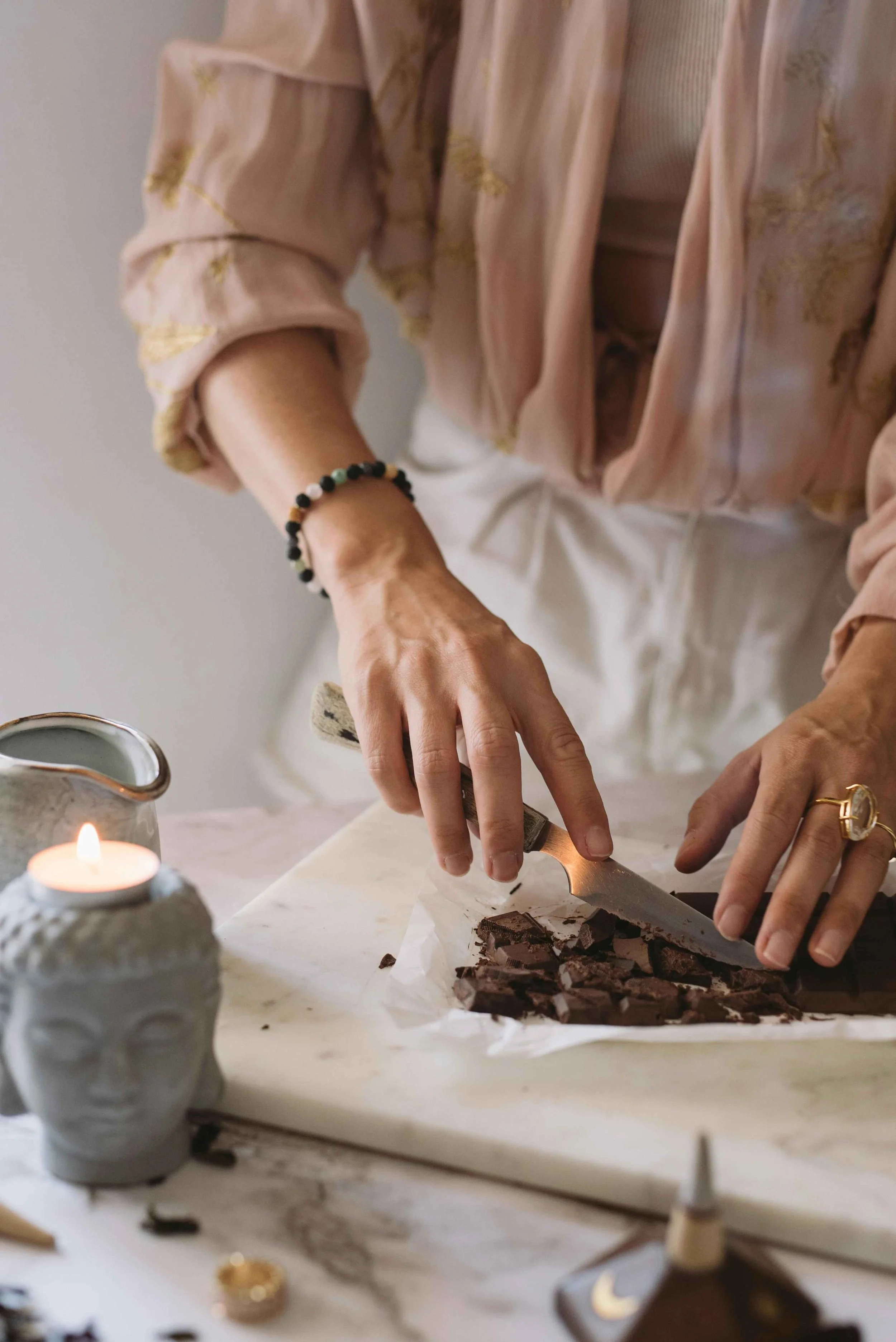
Both come from the same plant, but they're worlds apart in how they're treated. Cacao is the raw, minimally processed form, keeping its nutrients and its potency. Cocoa is usually roasted at high heat and mixed with sugar or milk powder, the kind you'd find in a commercial chocolate bar or a packet hot cocoa mix.
For ceremonial or spiritual use, pure ceremonial-grade cacao is the one to reach for. It's nourishment, not a sugar rush.
Washed or Fermented Cacao?
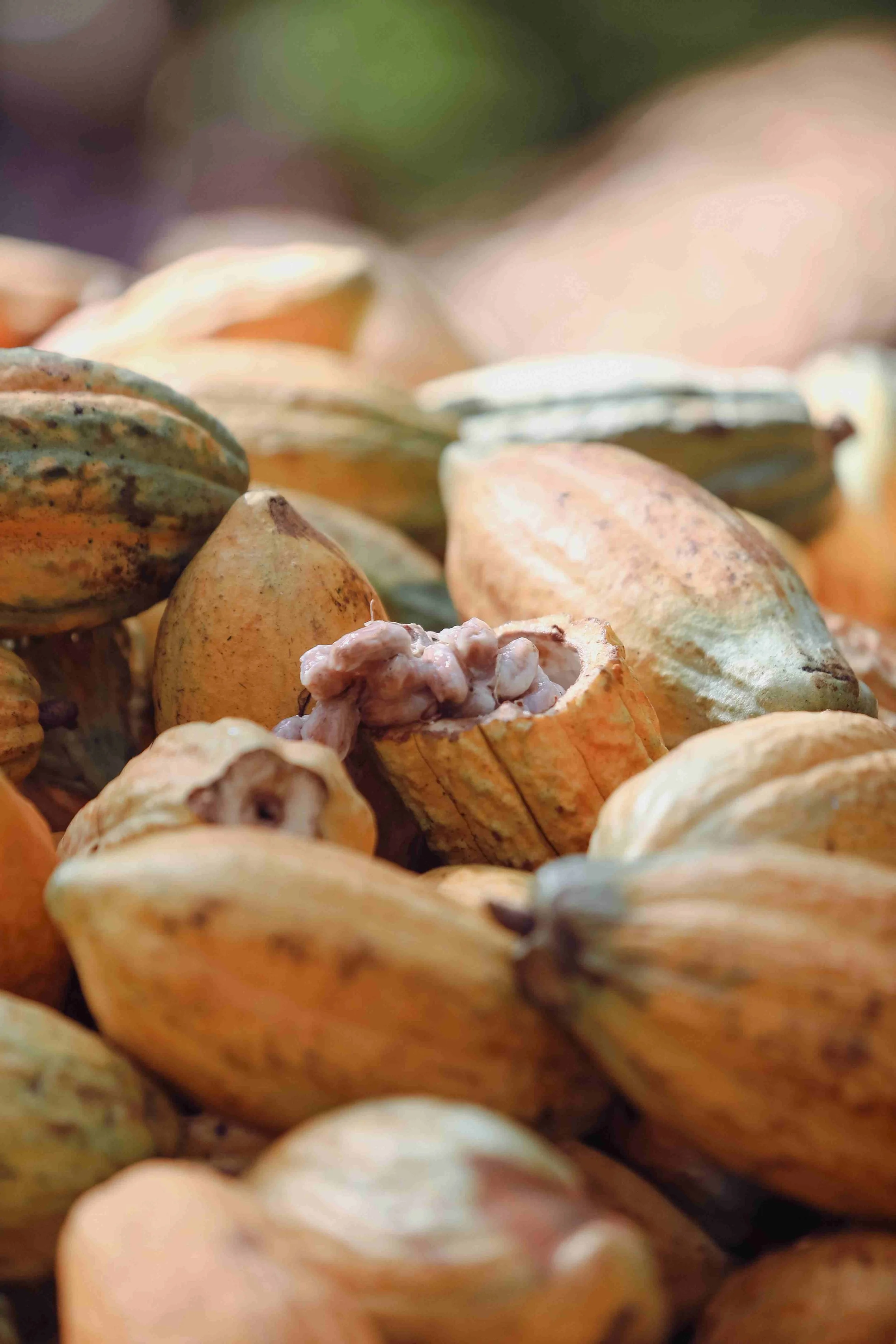
Not all ceremonial cacao is the same. Fermentation is a natural process that deepens flavour, softens bitterness and develops the compounds like theobromine that support mood and energy. Many practitioners consider fermented cacao the richer choice for ceremony and ritual.
Washed cacao skips fermentation. It's often lighter and milder, but usually without the same depth.
Your Free Ceremonial Cacao Ritual & Recipe
If you'd like to bring this into your own life, my free Ceremonial Cacao Ritual Guide walks you through preparing and drinking cacao with intention: grounding your energy, opening your heart, and creating a small, steady space for yourself, whether you're syncing with your cycle, setting an intention, or simply pausing.
If rituals like this speak to you, Moon Blood Mysteries goes further: your cycle, the moon, and real ritual practice for your womb, cacao and all.
Enjoy!